

B2B Channel Strategy: How to Grow Through Distributors and Partners

A B2B channel strategy is the plan for how you grow revenue through third parties who sell, install, or service on your behalf: distributors, reps, dealers, and integration partners. A strong one defines which partners fit, what each side owns, and how you support them so the relationship compounds instead of stalling.
TL;DR
- For companies that sell through distributors, reps, or dealers, channel strategy is the growth strategy. Treat it that way.
- Most channel programs stall because they recruit partners and then go quiet. Recruiting is the easy part. Enablement is where revenue comes from.
- Pick partners by relationship quality and market access, not by who signs up fastest.
- Give every partner a reason to choose you over the other lines they carry: margin, support, and ease of selling.
- Measure partner relationships by long-term value the way you measure your best direct accounts. A small first order can be the front door to a region worth millions.
For a manufacturer or specialty supplier, the people who carry your product to market often matter more than your own sales team. A distributor with 40 years of relationships in a region can open doors you would spend a decade trying to reach directly. The reverse is also true. A neglected channel quietly underperforms while you assume the partners “have it handled.”
The villain here is the set-it-and-forget-it channel: you sign distributors and reps, hand them a price sheet, and hope orders show up. They rarely do at the level you want, because your line is one of dozens that partner carries, and attention follows support. This guide walks through how to build a channel strategy that earns that attention and grows with you.
What is a B2B channel strategy?
A B2B channel strategy is the documented plan for acquiring and growing customers through partners rather than only through your own direct sales team. It covers who your partners are, what role each one plays, how revenue and responsibilities are split, and how you keep partners engaged and selling.
Defined term: Sales channel
A sales channel is any path your product takes from your company to the end customer. A direct channel is your own sales team selling straight to the buyer. An indirect channel runs through a third party: a distributor who stocks and resells, a manufacturer’s rep who sells on commission, a dealer, or a systems integrator who bundles your product into a larger solution.
Channel strategy answers a different question than direct sales strategy. Direct sales asks how your team wins a deal. Channel strategy asks how you build a network of partners whose own success depends on selling more of what you make. When that alignment is real, the channel becomes a growth engine that runs without your headcount scaling one-for-one with revenue.
How to build a B2B channel strategy
Building a channel strategy follows five steps: define the role the channel plays in your growth, choose partners by fit rather than availability, give partners a reason to prioritize your line, enable them to sell well, and manage the relationships by long-term value. Work through them in order.
Step 1: Define the role the channel plays in your growth
Decide what you actually want the channel to do before you recruit a single partner. A channel can do several jobs, and the partners you need depend on the job.
Some companies use the channel for reach, getting into regions or verticals their direct team cannot cover. Others use it for fulfillment, letting distributors carry inventory and handle logistics. Others use it for credibility, partnering with integrators whose endorsement carries weight with a skeptical buyer.
Write down which of these matters most. A channel built for reach needs partners with broad customer relationships. A channel built for technical credibility needs fewer partners with deep expertise. Recruiting the wrong type because they were eager to sign is how programs fill up with partners who never produce.
Defined term: Channel conflict
Channel conflict is the friction that happens when your direct sales team and your partners compete for the same customer, or when two partners compete for the same deal. Left unmanaged, it pushes partners to deprioritize your line. A clear strategy sets the rules of engagement up front: which accounts are direct, which are channel, and how leads get routed.
Step 2: Choose partners by fit before availability
Select partners based on the relationships and market access they already have. How quickly someone agrees to carry your product tells you almost nothing about whether they will sell it. The best channel partner is one whose existing customer base overlaps with the buyers you want, and whose reputation reflects the way you want your product represented.
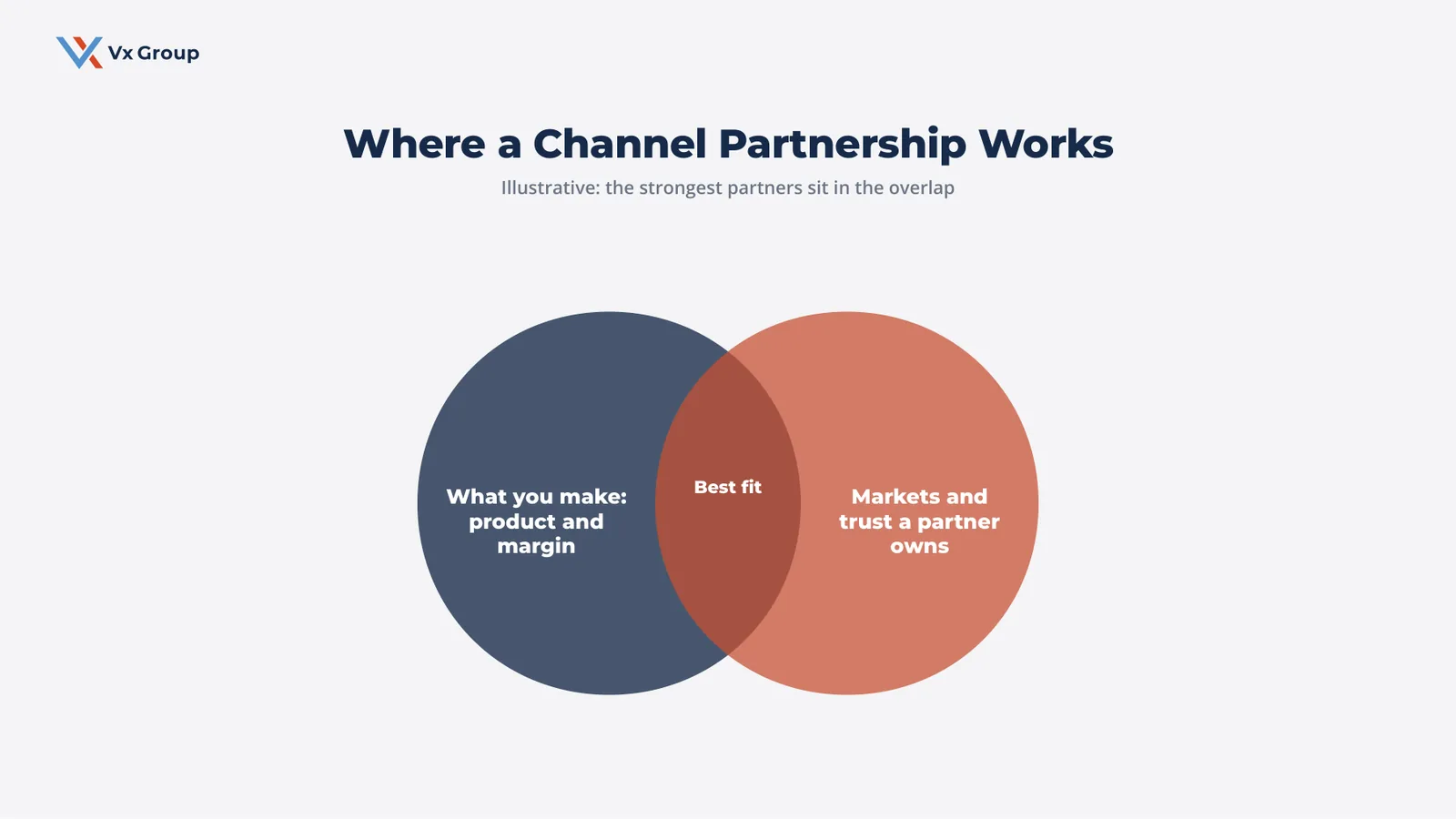
A useful test: a strong partnership sits where what you make meets the markets and relationships a partner already owns. When both are true, the partner can sell your product into trust they have already built, and you reach customers who would have taken you years to earn directly.
Resist the urge to sign every interested party. A bloated partner roster looks like momentum and produces almost none. A handful of partners who genuinely fit will outproduce a long list of names who signed an agreement and moved on. Rank prospective partners by the quality of their relationships in your target market, then pursue the top few with real intention.
Step 3: Give partners a reason to prioritize your line
Make it more rewarding and easier to sell your product than the competing lines a partner carries. Every distributor and rep has limited attention and sells dozens of products. Yours wins mindshare when choosing you is the obvious commercial decision.
Three levers move partner priority. Margin matters, because partners sell what pays them well. Support matters, because partners sell what is easy to quote, deliver, and stand behind. Demand matters, because partners sell what customers already ask for, which is why your own brand presence and marketing feed directly into channel performance.
Companies that treat the channel as a place to dump product at a discount and walk away get the attention that effort deserves. Companies that make their partners look good to their own customers earn loyalty that competitors cannot buy with a slightly better price.
Ready to grow?
Build a channel where distributors actively choose to sell you, instead of listing you and moving on.
Step 4: Enable partners to sell well
Equip partners with the tools, training, and materials they need to represent your product as well as your own team would. Recruiting a partner is the start of the work. Enablement is where channel revenue is actually made or lost.
Most channel programs stall at exactly this point. The partner signs, gets a login and a price list, and is left to figure out the rest. Provide product training so they can answer real buyer questions. Provide sales materials, proposal templates, and the kind of first-impression assets that make a partner look credible in front of a prospect. Make it simple to get a quote, check stock, and resolve a problem.
Defined term: Partner enablement
Partner enablement is the ongoing work of giving channel partners the knowledge, tools, and support to sell and service your product effectively. It includes training, sales collateral, technical resources, and a responsive point of contact. Enablement is the single biggest predictor of whether a channel program grows or flatlines.
The companies that win the channel build systems for this work so it does not depend on one relationship manager remembering to follow up. When enablement lives in a repeatable process, partner performance becomes predictable instead of personality-driven.
Step 5: Manage partner relationships by long-term value
Evaluate and invest in partners the way you would your best direct accounts, based on the lifetime value of the relationship. A single quarter’s order volume is a poor measure of what a partner is worth. A partner who placed a small first order may be the front door to a region worth millions over the next decade.
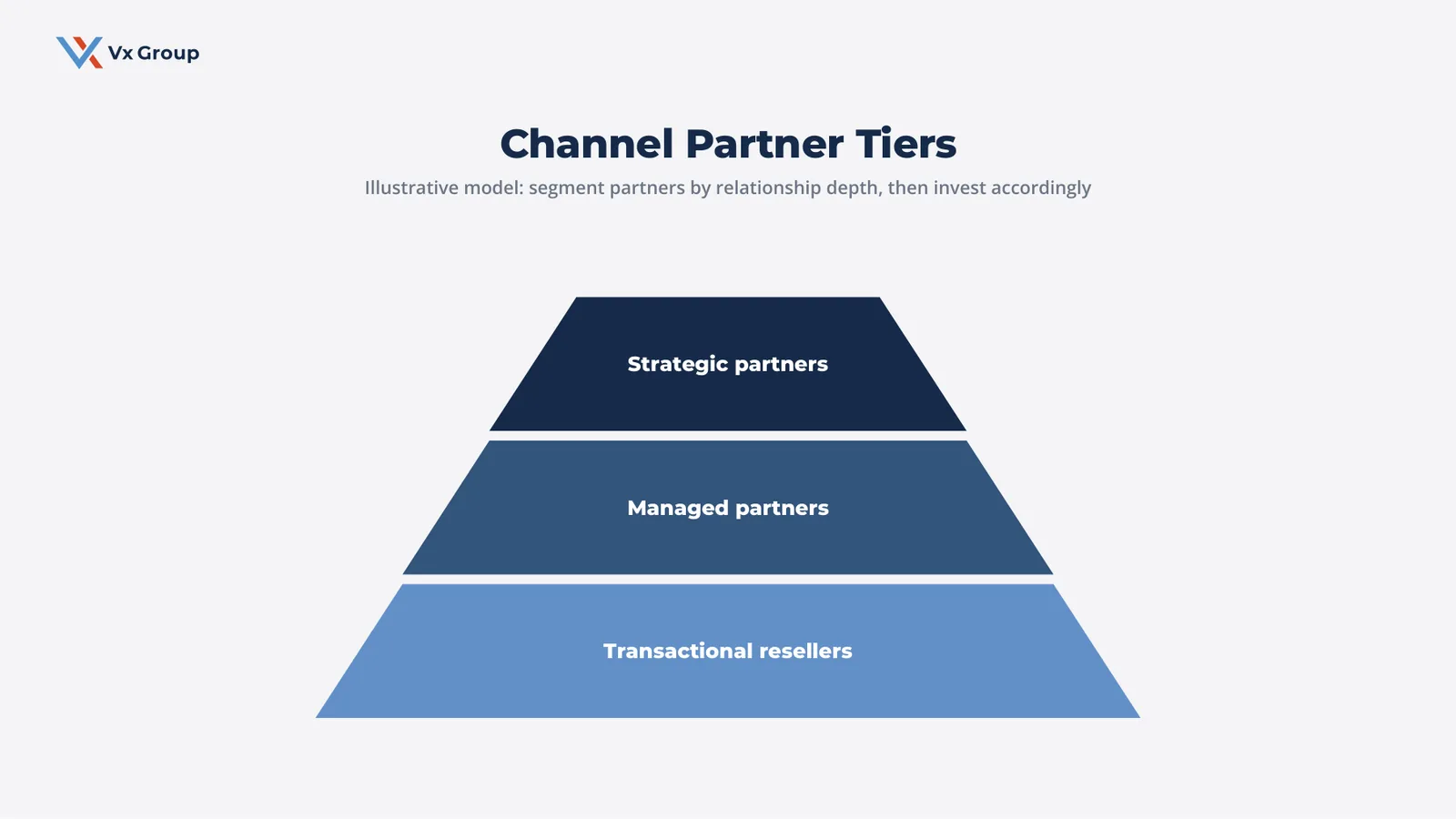
Hold regular relationship reviews with your top partners. Understand their business, their goals, and where you can help them grow before you look at where they can move more of your product. Track which partners are building real demand versus which are simply taking orders that would have come anyway. Then concentrate your support where the relationship has room to compound.
This is the same discipline that separates resilient B2B companies from fragile ones on the direct side. Growth comes from understanding which relationships matter and investing in them with intention, rather than spreading effort evenly across a roster and hoping. A channel managed this way becomes a durable asset that competitors cannot easily copy.
What is the difference between a distributor and a manufacturer’s rep?
A distributor buys your product, holds inventory, and resells it to customers, taking ownership and margin along the way. A manufacturer’s rep does not take ownership; they sell on your behalf for a commission and the order ships from you. Distributors give you reach and fulfillment; reps give you selling effort in markets where you lack coverage.
Which one fits depends on the role you defined in Step 1. If you need inventory close to customers and fast local fulfillment, distributors carry that weight. If you need expert selling into a specific vertical without building a salaried team there, reps often fit better. Many companies use both, with clear rules about which accounts and territories each one owns to prevent channel conflict.
How do you avoid channel conflict?
Avoid channel conflict by defining the rules of engagement before it happens: which accounts are served direct, which run through partners, and how inbound leads get routed. Put it in writing and enforce it consistently, because partners stop investing in a line the moment they feel your direct team will swoop in on the deals they develop.
The companies that manage this well are transparent. They tell partners exactly where the lines are, they protect partner-developed deals, and they route leads by a clear policy rather than by whoever shouts loudest. Trust in the channel is built the same way it is built with customers, through consistency over time.
Conclusion: the channel is a relationship business
Selling through distributors, reps, and dealers is one of the most powerful ways a B2B company can grow, because it lets you reach markets and customers far beyond what your own team could cover. That power only shows up when you treat the channel as a set of relationships to be built and protected, rather than a list of resellers to recruit and forget.
The companies that win the channel do the unglamorous work: they choose partners by fit, give them a real reason to prioritize the line, enable them to sell well, and manage every partner relationship by its long-term value. That work compounds. A well-run channel becomes a growth engine competitors cannot easily replicate.
If you are building or rebuilding a channel and want a clear, relationship-first approach to B2B growth, our live session walks through how to do it.
Ready to grow?
Grow through your channel as a relationship business, not a pricing contest.
FAQs
About the Author: David Tisdale
